synlayer
cense
Rare-disease decision support · for physicians

Make sense of the rare.

Cense reads the history, labs and reports you already have and returns a ranked differential across the rare diseases it covers, with the source behind each line.

Free for physiciansNPI / GMC verifiedNo citation, no claim
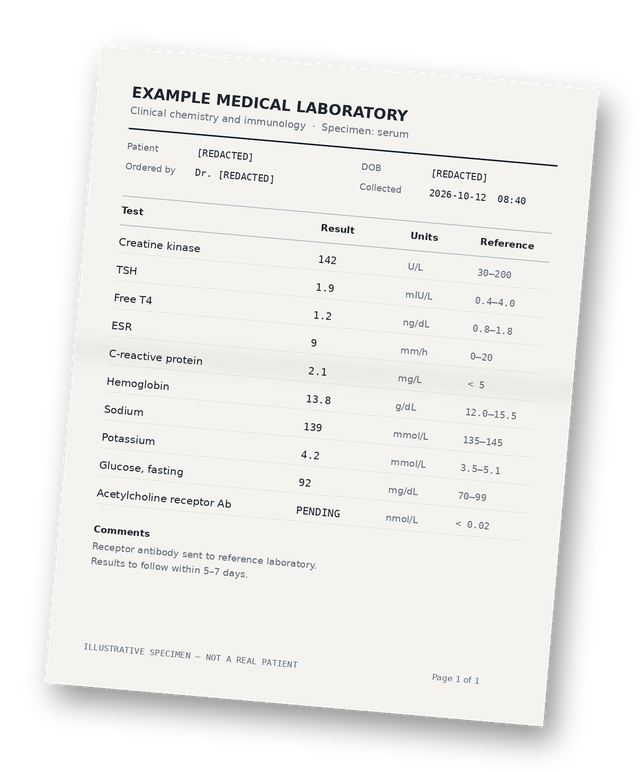
A photographed laboratory report with routine results and a pending acetylcholine receptor antibody, illustrative
cense · case 0412 · illustrative
Fatigable ptosis, evening diplopia 1 lab sheet · OCR
1
ConsiderMyasthenia gravis
Guideline-recommended
SupportsFluctuating ptosis and diplopia, worse by evening.
MissingAcetylcholine receptor antibodies still pending.

2
ConsiderMultiple sclerosis
Limited evidence
Argues againstWeakness that recovers with rest points away from a central lesion.
GuidelineGuideline-recommended

Example consensus guideline

G1 · §3.1 · Clinical features
Weakness of ocular, bulbar or limb muscles that worsens with sustained use and improves with rest is the clinical hallmark.

A field of 6,000 small dots, one for each rare disease described in Orphanet; 28 are lit, and 10 of those are ringed
One dot for each of the 6,000+ rare diseases described in Orphanet. 10 at launch 28 by 2028 See coverage

Rare diseases are common in aggregate and rare for any one physician. The experience to recognise them sits in a small number of centers.

300M+ people live with a rare disease
4.7 yrs on average to a confirmed diagnosis
6 in 10 first misdiagnosed with another condition
The path to a diagnosis today 1 in 4 patients had 8+ consultations
First symptomVisit 1 Referrals, repeat tests,alternative diagnoses Confirmed diagnosis4.7 years later, on average
Cense is meant for that first visit, when a physician first wonders whether the presentation could be something rare.

In more detail

How it works The architecture, and what happens to a case at each step. Read more → Supports a junction cause. Evidence and safety Review, release testing and monitoring for each disease. Read more → Coverage What the ten launch packs cover, and the eighteen that follow. Read more → For institutions Physicians use Cense free. Centers, labs and medical-affairs teams pay for it. Read more →

Early access for physicians

The first cohort joins through our rare-disease center pilot in 2027. Access is free and license-verified.

Request early access